Wednesday, November 01, 2006

Saturday, October 28, 2006

Pilli blogging


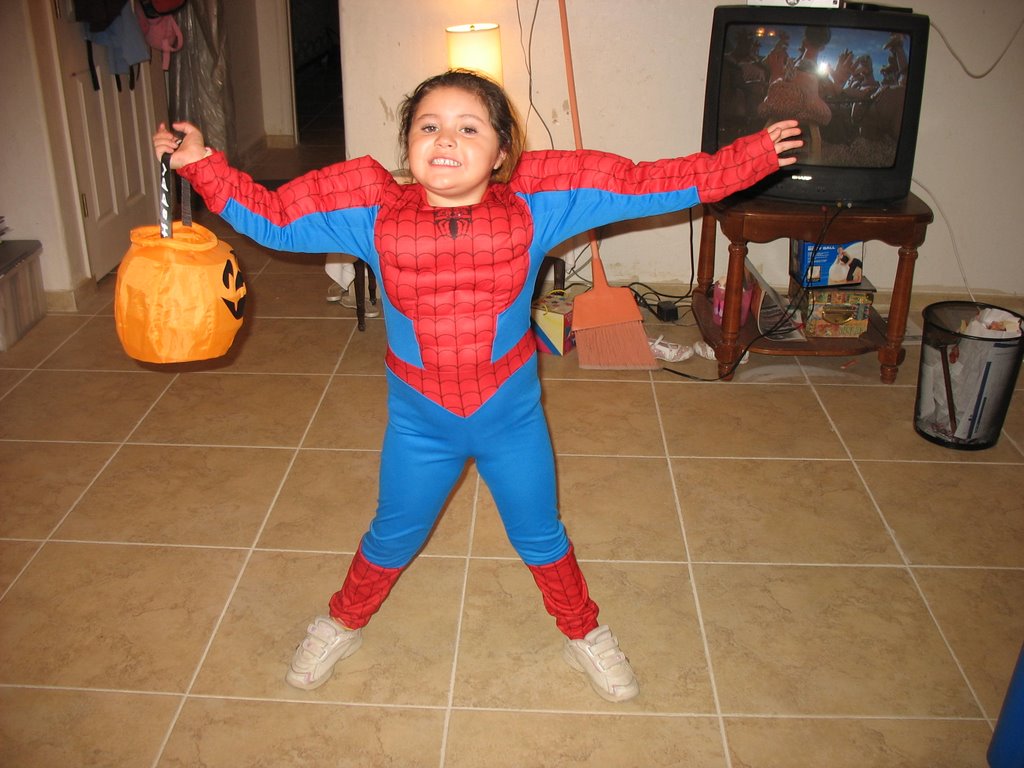
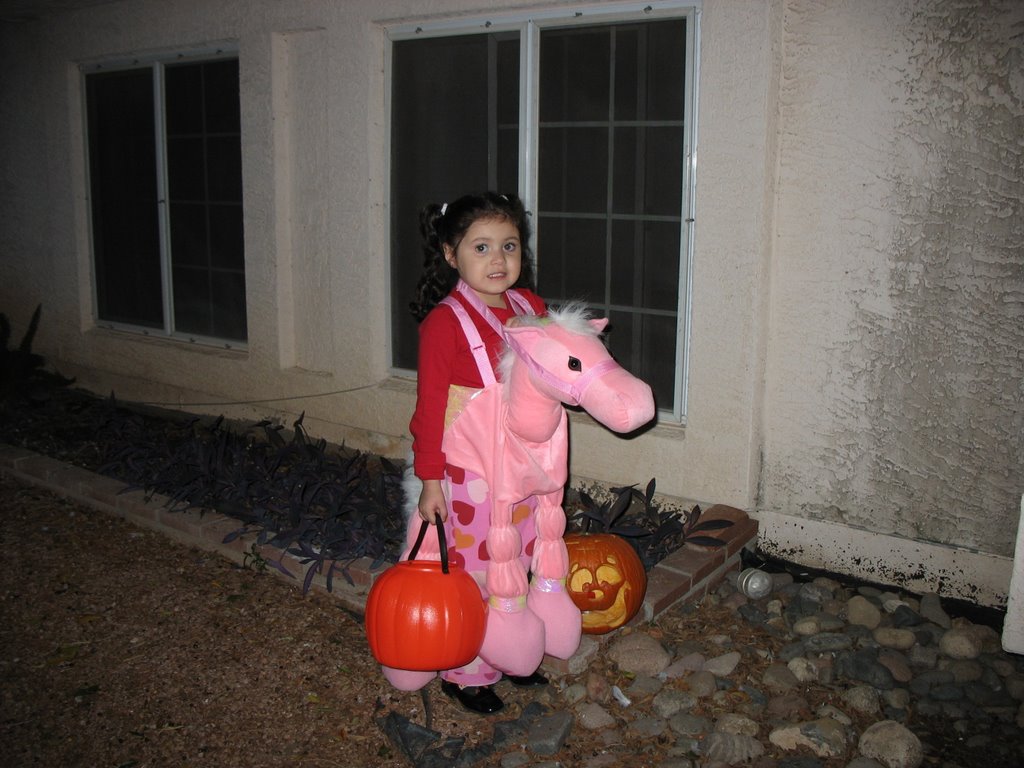
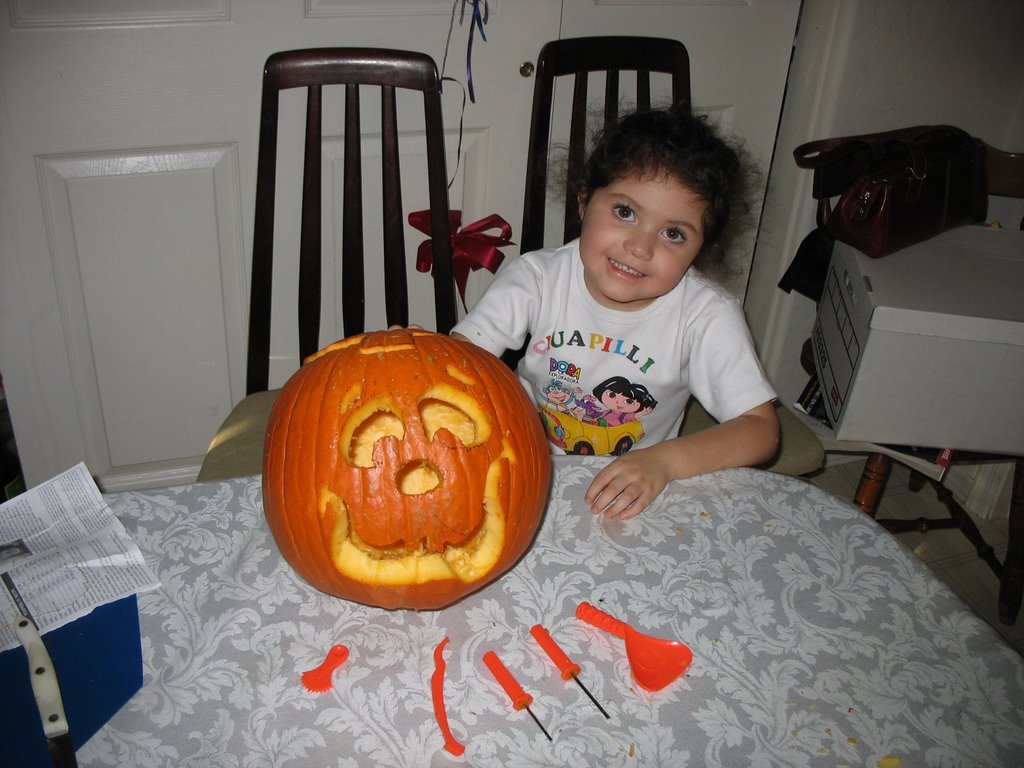
Ciaupilli's last years costume of a pink unicorn/horse.

Friday, October 20, 2006

Friday before


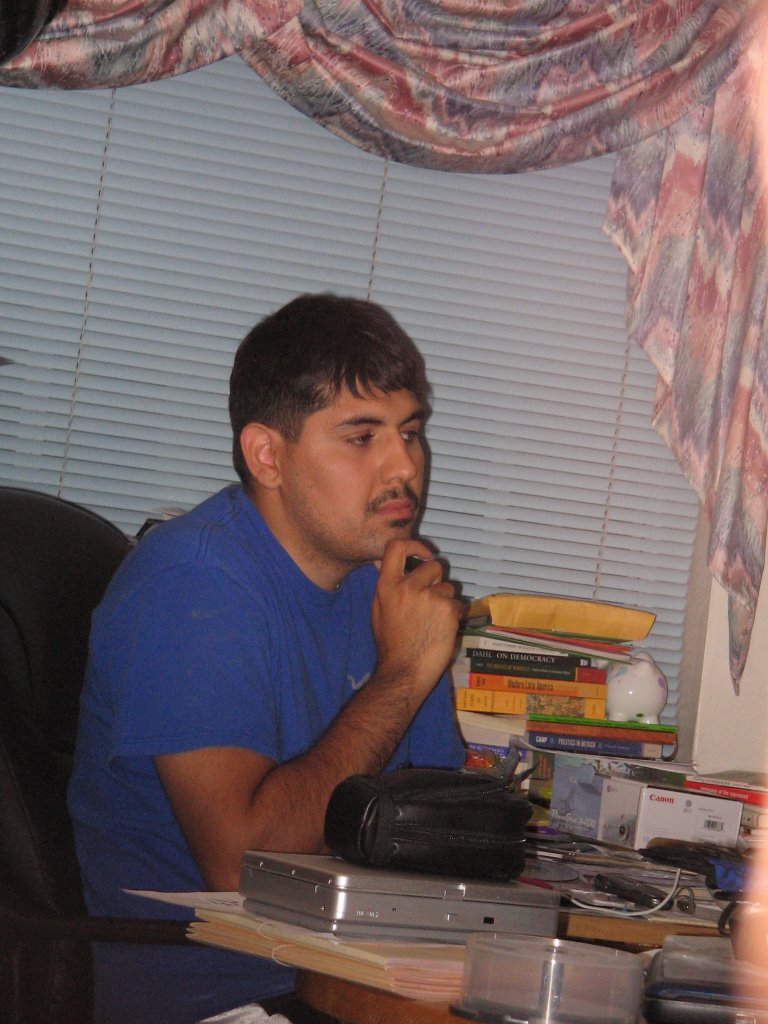
So we have a new apartment just need to turn on the lights and get the key probably all on wenesday. And my registration stuff is going alot better. 2200 is a great number considering our bad start. well here's a pilli picture from the computer webcam.

Friday, October 13, 2006

What the dems should do.

Guest: Jacob Hacker

Democrats need a clearer and more forward-looking economic vision, and I argue that they should embrace a vision that combines a commitment to economic security with a faith in economic opportunity. This vision—which I call an “insurance and opportunity society”—is starkly opposed to the ideal of an “ownership society” outlined by conservative critics of the welfare state. The premise of conservative’s ownership society is that we can only be free to pursue the opportunities in our lives if we do not share risks with others. An insurance and opportunity society, by contrast, is based on a very different premise: that we are most capable of fully participating in our economy and our society, most capable of taking risks and looking toward our future, when we have a basic foundation of financial security. In this vision, economic security is not opposed to economic opportunity. It is its cornerstone.

In The Great Risk Shift, I argue that an insurance and opportunity agenda must include the preservation and improvement of existing social insurance programs, like Social Security, but simply cannot end there. Our framework of social protection is overwhelmingly focused on the aged, even though young adults and families with children face the greatest economic strains. It emphasizes short-term exits from the workforce, even though long-term job losses and the displacement and obsolescence of skills have become more severe. It embodies, in places, the antiquated notion that family strains can be dealt with by a second earner—usually, a woman—who can easily leave the workforce when there is a need for a parent at home. Above all, it is based on the idea that job-based private insurance can easily fill the gaps left by public programs—when it is ever more clear that it cannot.

This means the emphasis should be on portable insurance to help families deal with major threats to income and big blows to household wealth. It also means that these promises should be mostly separate from work for a particular employer: a commitment that moves seamlessly from job to job. Yes, this will sometimes mean that government has to take the lead, but it will also mean a system of economic protection that’s more family friendly, more conducive to having kids, more supportive of obtaining new skills, more accommodating of employers buried under the cost of their benefit obligations—in short, more supportive of a large productive workforce that will lessen the strain on programs for the aged. It also means a system much less imperiled by the demographic shifts that have placed Medicare and Social Security in danger.

Instead of slashing existing protections, in sum, we should work to include families in the bargain—by, for instance, expanding Medicare to younger Americans, upgrading unemployment insurance to reflect the changing character of job loss, and ensuring that 401(k) retirement plans are broadly distributed and are capable of providing guaranteed benefits for the remainder of retired people’s lives.

I won’t go into the detailed agenda that I lay out in The Great Risk Shift here. I will, however, mention one novel proposal I have developed that I call “Universal Insurance”—a kind of umbrella insurance policy protecting working families against catastrophic drops in income or budget-wrecking health costs. I have outlined Universal Insurance in considerable detail for the Brooking Institution’s Hamilton Project, and I encourage those interested to find out more about the plan on the Project’s website As you will find if you visit the proposal, my estimates suggest that Universal Insurance would cost much less than what the government now spends to subsidize 401(k) plans each year. In turn, it would lift more than 3 million Americans out of poverty, and cut Americans’ chance of experiencing a 50 percent or larger income drop in half.

All these changes will not come without struggle, of course, and the struggle will be fierce. Yet we should not forget the principles at stake. If we acquiesce to the “creative destruction” of American-style capitalism, then we also have to accept that many Americans, at one point or another, will be hit with disasters they cannot cope with on their own. Providing protection against these risks is a way of ensuring that the dynamism of our economy is politically sustainable and morally defensible. It is also a way of ensuring that Americans feel secure enough to take the risks necessary for them and their families to get ahead. Corporations enjoy limited liability, after all, precisely to encourage risk-taking. But while today we still have limited liability for American corporations, increasingly we have full liability for American families.

This must change.

Tuesday, September 26, 2006

Myth of me


I'm not a gifted writer or gifted at much else. What I am is blessed with a lot of great people and loves of my life. But within all that love I've realized that it’s too hard to be everything to everyone. My myth of myself has been severely rocked and nearly wiped out of existence thanks to an unsettling time with in my beloved California. Work is going unevenly as well but at least that has an end date, this other unsettled time does not at all seem to have any end date. I'm hoping one day to be able to rewrite my myth of myself but I'm not going to have time to do that for a good while.

Things are changing so fast I wish I could catch up and make the best decisions although I know there are consequences for all our choices. I'm hoping I got all my organizing and politicking out of me so I can focus on making some grub so I can take care of my little pilli. I think going back to Phoenix makes the most sense but the consequences are riff with peril. Staying in California is a very selfish notion for the myth of me and I've come to understand that especially after finding out home is an artificial construct. I've always thought myself quite talented at making a safe place for myself in spite of the difficult environment around me but that talent has either run out or finally eludes me. My patience’s has come to its end and this myth that I'm a patience person is wearing thin to me and frankly it worries me what I am left with without my patients. But inspite of it all I think there is hope somewhere in all this stress and confusion, there has to be especially after 5 years of feeling lost I'm ready to get on my game on. To all those that care don't dispare just ask me how I'm doing when I turn 26 in November. We'll see where the myth stand because as all good tall tales they sometime need to be revised to be made better.

Sunday, September 17, 2006

Pilli bloggin


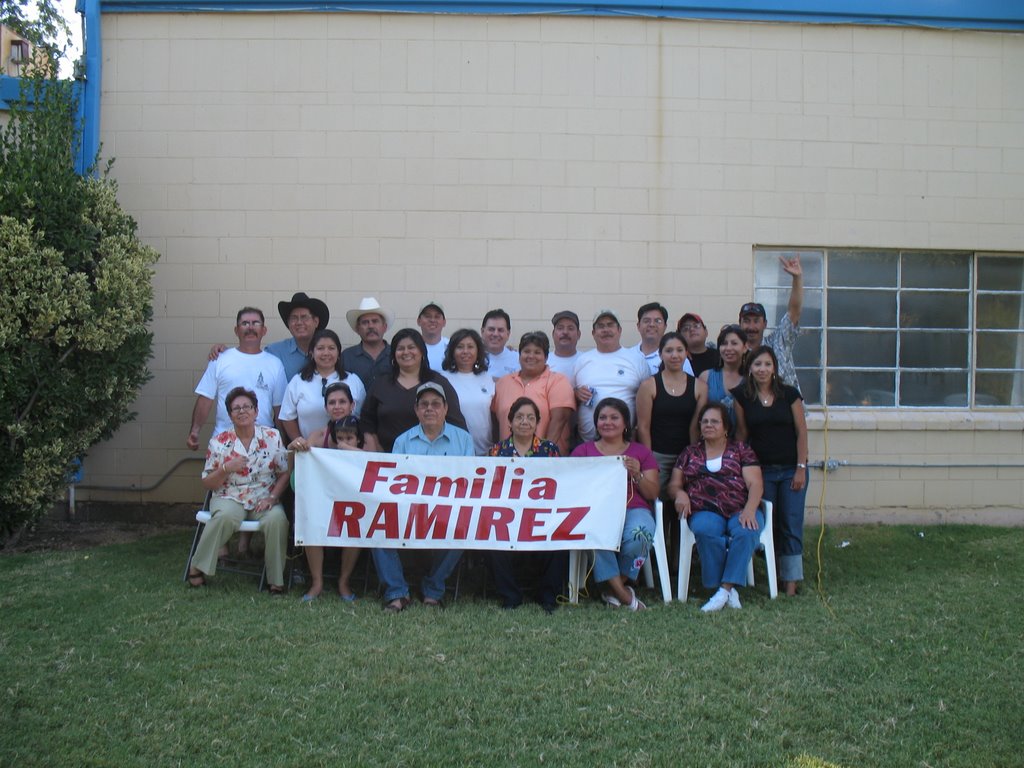
haven't done one of these for a few weeks. Lots of stuff going on might be getting a place in LA. Really getting into the voter registration thing and traveling alot. Hoping to find something steady in Central Cali but only god knows. Enjoy some pictures from 20th Ramirez Family Reunion. One is all the cousins on my mother's side and then all the cousin's of my mother on my grandmother's side. Then Pilli and Emily playing DS. cool

Tuesday, September 12, 2006

PSA

for my job the vote for pedro spot

9/11 post

this is the best I've read on the issue.


keith oberman
Olbermann speaks


This hole in the ground

Half a lifetime ago, I worked in this now-empty space. And for 40 days after the attacks, I worked here again, trying to make sense of what happened, and was yet to happen, as a reporter.

All the time, I knew that the very air I breathed contained the remains of thousands of people, including four of my friends, two in the planes and -- as I discovered from those "missing posters" seared still into my soul -- two more in the Towers.

And I knew too, that this was the pyre for hundreds of New York policemen and firemen, of whom my family can claim half a dozen or more, as our ancestors.

I belabor this to emphasize that, for me this was, and is, and always shall be, personal.

And anyone who claims that I and others like me are "soft,"or have "forgotten" the lessons of what happened here is at best a grasping, opportunistic, dilettante and at worst, an idiot whether he is a commentator, or a Vice President, or a President.

However, of all the things those of us who were here five years ago could have forecast -- of all the nightmares that unfolded before our eyes, and the others that unfolded only in our minds -- none of us could have predicted this.

Five years later this space is still empty.

Five years later there is no memorial to the dead.

Five years later there is no building rising to show with proud defiance that we would not have our America wrung from us, by cowards and criminals.

Five years later this country's wound is still open.

Five years later this country's mass grave is still unmarked.

Five years later this is still just a background for a photo-op.

It is beyond shameful.

At the dedication of the Gettysburg Memorial -- barely four months after the last soldier staggered from another Pennsylvania field -- Mr. Lincoln said, "we cannot dedicate, we cannot consecrate, we cannot hallow this ground. The brave men, living and dead, who struggled here, have consecrated it, far above our poor power to add or detract."

Lincoln used those words to immortalize their sacrifice.

Today our leaders could use those same words to rationalize their reprehensible inaction. "We cannot dedicate, we can not consecrate, we can not hallow this ground." So we won't.

Instead they bicker and buck pass. They thwart private efforts, and jostle to claim credit for initiatives that go nowhere. They spend the money on irrelevant wars, and elaborate self-congratulations, and buying off columnists to write how good a job they're doing instead of doing any job at all.

Five years later, Mr. Bush, we are still fighting the terrorists on these streets. And look carefully, sir, on these 16 empty acres. The terrorists are clearly, still winning.

And, in a crime against every victim here and every patriotic sentiment you mouthed but did not enact, you have done nothing about it.

And there is something worse still than this vast gaping hole in this city, and in the fabric of our nation. There is its symbolism of the promise unfulfilled, the urgent oath, reduced to lazy execution.

The only positive on 9/11 and the days and weeks that so slowly and painfully followed it was the unanimous humanity, here, and throughout the country. The government, the President in particular, was given every possible measure of support.

Those who did not belong to his party -- tabled that.

Those who doubted the mechanics of his election -- ignored that.

Those who wondered of his qualifications -- forgot that.

History teaches us that nearly unanimous support of a government cannot be taken away from that government by its critics. It can only be squandered by those who use it not to heal a nation's wounds, but to take political advantage.

Terrorists did not come and steal our newly-regained sense of being American first, and political, fiftieth. Nor did the Democrats. Nor did the media. Nor did the people.

The President -- and those around him -- did that.

They promised bi-partisanship, and then showed that to them, "bi-partisanship" meant that their party would rule and the rest would have to follow, or be branded, with ever-escalating hysteria, as morally or intellectually confused, as appeasers, as those who, in the Vice President's words yesterday, "validate the strategy of the terrorists."

They promised protection, and then showed that to them "protection" meant going to war against a despot whose hand they had once shaken, a despot who we now learn from our own Senate Intelligence Committee, hated al-Qaida as much as we did.

The polite phrase for how so many of us were duped into supporting a war, on the false premise that it had 'something to do' with 9/11 is "lying by implication."

The impolite phrase is "impeachable offense."

Not once in now five years has this President ever offered to assume responsibility for the failures that led to this empty space, and to this, the current, curdled, version of our beloved country.

Still, there is a last snapping flame from a final candle of respect and fairness: even his most virulent critics have never suggested he alone bears the full brunt of the blame for 9/11.

Half the time, in fact, this President has been so gently treated, that he has seemed not even to be the man most responsible for anything in his own administration.

Yet what is happening this very night?

A mini-series, created, influenced -- possibly financed by -- the most radical and cold of domestic political Machiavellis, continues to be televised into our homes.

The documented truths of the last fifteen years are replaced by bald-faced lies; the talking points of the current regime parroted; the whole sorry story blurred, by spin, to make the party out of office seem vacillating and impotent, and the party in office, seem like the only option.

How dare you, Mr. President, after taking cynical advantage of the unanimity and love, and transmuting it into fraudulent war and needless death, after monstrously transforming it into fear and suspicion and turning that fear into the campaign slogan of three elections? How dare you -- or those around you -- ever "spin" 9/11?

Just as the terrorists have succeeded -- are still succeeding -- as long as there is no memorial and no construction here at Ground Zero.

So, too, have they succeeded, and are still succeeding as long as this government uses 9/11 as a wedge to pit Americans against Americans.

This is an odd point to cite a television program, especially one from March of 1960. But as Disney's continuing sell-out of the truth (and this country) suggests, even television programs can be powerful things.

And long ago, a series called "The Twilight Zone" broadcast a riveting episode entitled "The Monsters Are Due On Maple Street."

In brief: a meteor sparks rumors of an invasion by extra-terrestrials disguised as humans. The electricity goes out. A neighbor pleads for calm. Suddenly his car -- and only his car -- starts. Someone suggests he must be the alien. Then another man's lights go on. As charges and suspicion and panic overtake the street, guns are inevitably produced. An "alien" is shot -- but he turns out to be just another neighbor, returning from going for help. The camera pulls back to a near-by hill, where two extra-terrestrials are seen manipulating a small device that can jam electricity. The veteran tells his novice that there's no need to actually attack, that you just turn off a few of the human machines and then, "they pick the most dangerous enemy they can find, and it's themselves."

And then, in perhaps his finest piece of writing, Rod Serling sums it up with words of remarkable prescience, given where we find ourselves tonight: "The tools of conquest do not necessarily come with bombs and explosions and fallout. There are weapons that are simply thoughts, attitudes, prejudices, to be found only in the minds of men.

"For the record, prejudices can kill and suspicion can destroy, and a thoughtless, frightened search for a scapegoat has a fallout all its own -- for the children, and the children yet unborn."

When those who dissent are told time and time again -- as we will be, if not tonight by the President, then tomorrow by his portable public chorus -- that he is preserving our freedom, but that if we use any of it, we are somehow un-American...When we are scolded, that if we merely question, we have "forgotten the lessons of 9/11"... look into this empty space behind me and the bi-partisanship upon which this administration also did not build, and tell me:

Who has left this hole in the ground?

We have not forgotten, Mr. President.

You have.

May this country forgive you.

stolen post

this post speaks to one part of my life drama at the moment-


------------------
September 4, 2006
When What We Love And Who We Love Are At Odds
categories: news

Whatever his animal conservation and awareness accomplishments, Steve Irwin's clownlike persona and the unfathomably unpredictable circumstances of his death make him a poor posterboy for discussing the issue of whether to continue extreme behavior after you have a kid.

[And no matter how experienced he was or how many precautions he took, there is no way anyone can convince me that it was anything but exploitative and irresponsible to put on a show about feeding a crocodile while dangling his kid alongside the chicken.] But none of that lessens the tragedy of a family--with two small children--losing their father so early in their lives.

For me, croc feeding joined skydiving and most of jaywalking, even, on my personal list of Things I Could Conceivably Rationalize Before The Kid, But That I Now Feel Too Burdened With Responsibility To Stay Alive To Take Up. That list is going to be different for everyone, and none is or should be the Dad In The Plastic Bubble, but I really wonder where and how you negotiate the line between yourself and your family.

People have taken me to task for the tone of my Irwin post, fine. But Andy's one-line link to the news had a tagline that's haunted me all day: "died doing what he loved." It's a statement, rationale, explanation that's meant, I guess, to help make sense of an otherwise senseless, random event.

I wanted to type 'accident,' but the whole point is that it's not referring to some banal everyday activity like crossing the street or a sudden illness like stage 2 pancreatic cancer, or even something stupidly avoidable like standing under a tree in a lightning storm. Beyond the basics, though, we regularly put ourselves at varying degrees of risk doing "what we love" whether that's our jobs, our hobbies, our compulsions, or our passions. And when that risk-reward calculation goes south, it's not just we who pay the price, it's our families.

Reading Irwin's story, I immediately flashed back to May 18 a Thursday night, when I got ambushed in my car by an NPR commentator's tribute to extreme skiing pioneer Doug Coombs. Coombs and one of his brightest protege's were killed in April while skiing a series of 50-degree couloirs in the most dangerous part of the extreme skiing mecca of La Grave, in the French Alps.

The commentator, Alex Markels, like many, many people who knew or skied with Coombs, was in awe of him and had near-endless stories of formative experiences to tell. [This Coombs tribute from the Denver Post is similar, only longer.]

It was a heartfelt tribute to a sorely missed friend who clearly touched many lives and "died doing what he loved," but right at the end, Markels mentioned that now someone else will have to teach Coombs' 2-year-old son how to ski, because his dad can't.

Well, I promptly lost it and had to pull over. I'm a lameass skier and getting worse with every winter I miss, but teaching my kid to ski is on the shortshortlist of things I've always envisioned when I became a dad. As I sat there, though, I felt ambushed: was it obvious only to me that no amount of praise from friends or customers was going to offset the absence of his father in that kid's life?

But what can you do? Coombs' entire life, it seemed, was death-defying skiing. His wife is an extreme skier, too. He runs extreme skiing tours and makes extreme skiing documentaries. Can anyone really expect him to stop being who he is just because a kid comes along? No one can answer that for anyone but himself, and that's my whole dilemma.

I'm lucky, I guess, because the things I love don't cause me to face death or injury too often. Or at all. But even so, I feel there is so much more at stake now, including the well-being of someone who cannot possibly understand, much less accede to, the concept of risk, that there are now whole worlds of things I just won't do because of what some outcome may do to my kid's life. Most of the time, I'm totally cool with that; hell, most of the time, I don't even notice. But then something like this happens to remind me what sacrifices I face, and--and well, it's like wrestling a big ol' croc. I reckon. And I guess it makes me ramble.
posted by greg at September 4, 2006 4:12 PM | add to del.icio.us

Wednesday, August 30, 2006

Life is changing

I love California and I hope it loves me back because I feel like everything is changing very quickly right now. I am now the sole money maker and we have yet to settle on a place to live in california. Transitions are good if utilized correctly, heres to making the most of the situation.